
GTA 6: The 2014 Prototype That Changed Rockstar’s NPCs
Jason Schreier’s follow-up video on GTA VI reveals the Red Dead Redemption 2 prototype behind "Greet or Antagonize", narrower roads, the weapon wheel and more.
After his big Bloomberg feature on the making of GTA VI, reporter Jason Schreier posted a YouTube video on October 19, 2026 with details that didn't make it into print. The most interesting one dates back to 2014 — and to a different game: the prototype behind one of Red Dead Redemption 2's best-loved mechanics, the ability to greet or antagonize anyone you meet.
The prototype that won over Rob Nelson
According to Rockstar head of development Rob Nelson, it started with a prototype built by Mark Tennant, the studio's vice president of animation. Tennant showed it to Phil Hooker first, and Hooker was hesitant to pass it on to Nelson — everyone knew that if Nelson liked something ambitious, it was going in the game no matter how much work it took.
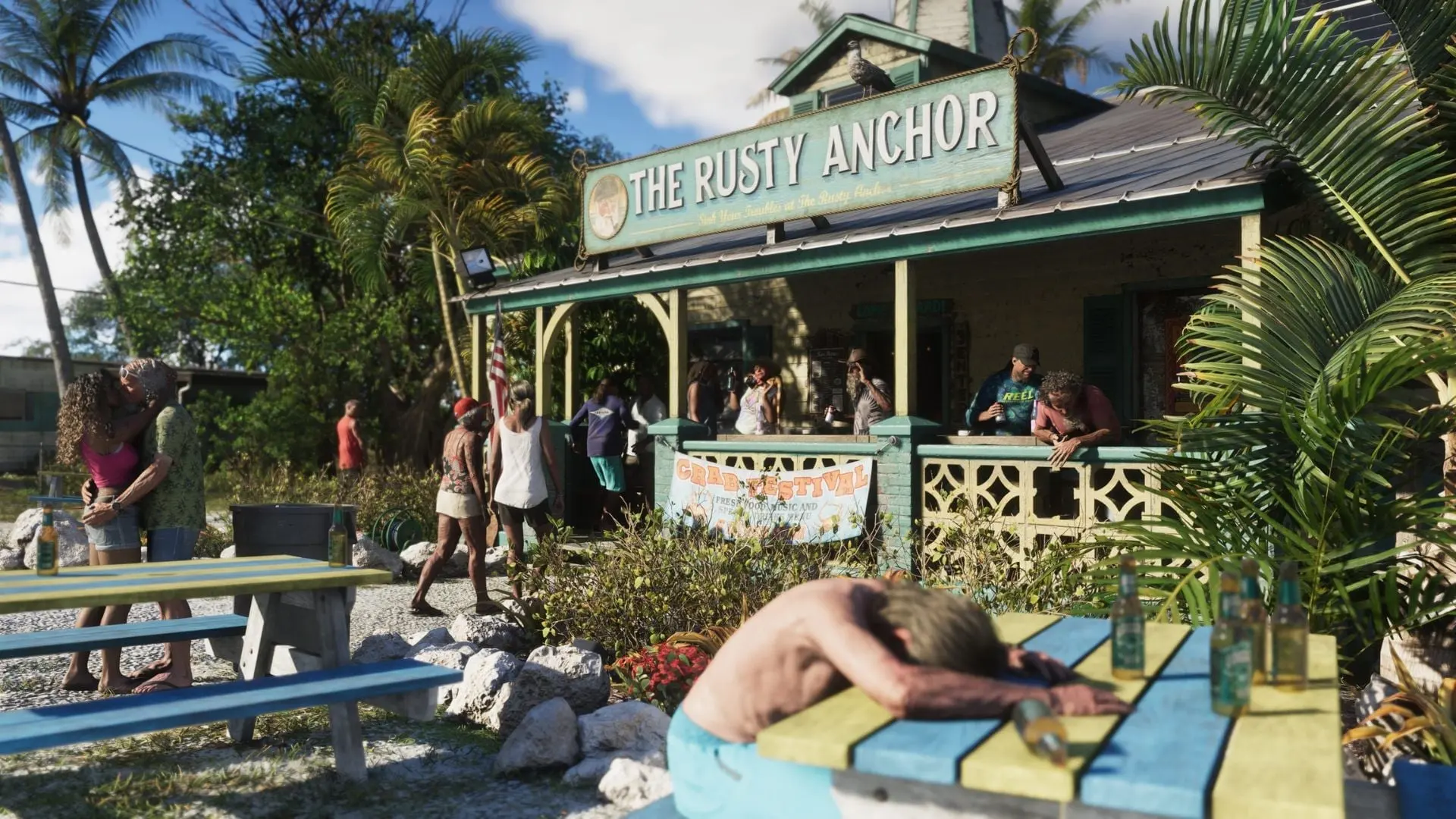
He liked it. His reaction, as Schreier tells it: "This is incredible; this will revolutionize the way our games and our worlds work." The result is the system every RDR2 player knows: hold L2/LT on someone to greet or antagonize them, with responses that change depending on who they are and what's going on. It's also the foundation of what Rockstar has shown of GTA VI's NPCs, where every resident of Leonida seems to have a life of their own.
Everything else from the video
Topic | What Schreier said |
|---|---|
Long-timers | Some developers have spent more than 11 years on GTA VI, starting with map design and research trips to Miami |
The rough patch | 2019 to 2022, with things clearly improving in 2022–2023 |
Roads | Narrower and denser than in GTA V |
Weapon select | A different system was nearly used, but the team went back to the wheel |
An Extended Look | The Netflix premiere was Rockstar's idea, pitched by marketing head Mark Adamson |
Creative freedom | Artists can add small environmental details without senior management planning everything |
A Miami office | Rockstar considered opening one, and some staff pushed for it |

Both timelines line up with the Bloomberg piece: the first research trip to Miami was in 2015, and the "dark period" when the game's vision hadn't come together matches those difficult years. The Netflix detail makes sense in hindsight too — An Extended Look was an unusual marketing move for a video game.
Why narrower roads matter
It sounds minor, but it says a lot about Vice City. Los Santos's wide boulevards were built for speed and police chases; tighter, busier streets make the city feel more like Miami and more believable, but also harder to blast through at full throttle. Together with the return of the weapon wheel, it points to a GTA VI that changes a lot under the hood without throwing out what players already know.
Our take
The prototype story sums up how Rockstar works: a small idea from an animator, a boss willing to pile more work on the team, and, years later, a mechanic that defined a generation of open worlds. If GTA VI's NPCs live up to the trailers, a good chunk of the credit goes back to that 2014 demo.